Moles or Voles? Uncover the Truth Behind Your Ohio Lawn Damage.
Is your Ohio yard riddled with mysterious tunnels or disappearing plants? Homeowners often confuse moles and voles, but understanding the difference is crucial for effective lawn repair. HexGuard Pest Solutions' guide helps you easily identify the real culprit behind your lawn's woes and discover proven strategies to protect your landscape. Learn how to tell them apart and reclaim your beautiful outdoor space today!
Decoding Your Lawn Damage: Is it Moles or Voles in Your Ohio Yard?
Waking up to a perfectly manicured lawn only to find it riddled with tunnels and mounds can be incredibly frustrating for any Ohio homeowner. You’ve put in the effort, you've nurtured your grass, and now it looks like a miniature battlefield. But who are the unseen culprits? Is it the tunneling mole or the plant-munching vole? Knowing the difference is the first step to reclaiming your beautiful yard.
At HexGuard Pest Solutions, we understand the unique challenges Ohio homeowners face with these persistent pests. Let's break down how to identify your unwanted guest and what you can do about it.
The Unseen Architects: Moles
Moles are nature's excavators. These fascinating creatures are not rodents, but insectivores, meaning their diet mainly consists of insects. They are specially designed for an underground life.
What to look for with moles:
- Appearance: Moles are often described as having velvety fur, tiny eyes (often hidden), and large, paddle-like front feet with strong claws, perfect for digging.
- Diet: They love to feast on grubs, earthworms, and other soil-dwelling insects. Crucially, moles do NOT eat plants or their roots.
- Damage Signs:
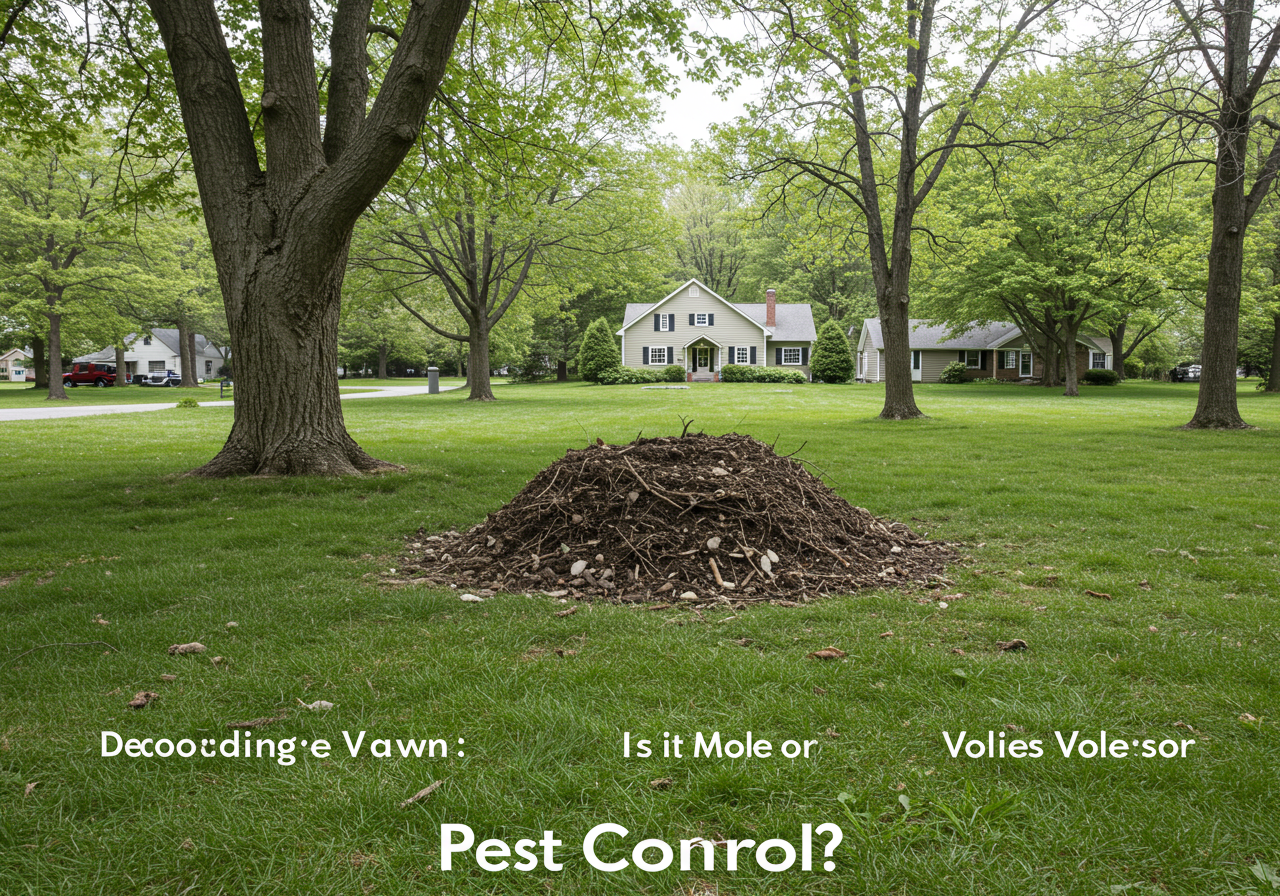
- Mole Hills: These are the most obvious sign. They are volcano-shaped mounds of soil, usually about 6-12 inches in diameter, created when moles push dirt to the surface from their deep tunnels.
- Raised Ridges (Surface Tunnels): You'll see raised, shallow pathways winding across your lawn. These are feeding tunnels just beneath the surface, where moles search for insects.
- Behavior: Moles are solitary animals and can dig up to 18 feet of tunnels in a single hour! They create elaborate tunnel systems, some deep for living and others shallow for hunting.
While moles don't eat your plants, their tunneling can severely damage roots, causing grass to die in lines, and can make your lawn uneven and hazardous. A single mole can cause significant damage to a lawn, making their presence a nuisance for many.
The Plant Nibblers: Voles
Voles, often mistaken for mice, are true rodents. Unlike moles, voles have a voracious appetite for plants and can be incredibly destructive to your garden and landscape.
What to look for with voles:
- Appearance: Voles look like stocky field mice with small eyes, small ears (often hidden by fur), and a short tail. They typically range from 5 to 7 inches long.
- Diet: Voles are primarily vegetarians. They love to eat grass, plant roots, bulbs, tubers, and even gnaw on the bark of small trees and shrubs, especially during winter when other food sources are scarce.
- Damage Signs:
- Surface Runways: Voles create distinct, narrow (about 1-2 inches wide) "runways" or paths in your lawn, often hidden beneath dense grass or snow. These are tunnels above ground or just barely below the surface.
- Small, Dime-Sized Entry Holes: Unlike molehills, vole holes are typically small, clean-cut openings in the ground, often found along their runways.
- Damaged Plants: You'll see evidence of plants being eaten, especially at ground level. Look for gnaw marks on the base of trees and shrubs, or entire plants dying because their roots have been chewed away.
- Behavior: Voles are more social than moles and can have multiple litters throughout the year, meaning their populations can grow quickly. They often use mole tunnels for shelter and travel, adding to the confusion for homeowners.
Did you know that voles can cause up to 90% of plant damage in some areas if left unchecked? Their love for roots and bark means they can kill trees, shrubs, and entire garden beds, leading to costly replacements.
How to Be Sure: The Tell-Tale Signs
Still unsure if it's a mole or a vole? Here’s a quick checklist to help you identify your lawn destroyer:
| Feature | Moles | Voles |
|---|---|---|
| Primary Damage | Volcano-shaped mounds, raised surface ridges | Narrow surface runways, small entry holes |
| Diet | Insects, grubs, worms (NO plants) | Plants, roots, bulbs, bark (plant destruction) |
| Appearance | Large front claws, tiny eyes, no visible ears | Mouse-like, small eyes/ears, short tail |
| Tunnel Type | Deep, intricate tunnels, raised shallow ones | Shallow surface runways, small entry holes |
| Plant Damage | Indirect (root disruption from tunneling) | Direct (eating roots, bark, foliage) |
If you see neat piles of dirt and raised lines, you likely have moles. If your plants are dying or have gnaw marks, and you see small pathways through your grass, you're probably dealing with voles. Sometimes, you might even have both!
Why Professional Help is Best for Ohio Lawns
Dealing with moles and voles can be challenging. Store-bought traps or repellents often prove ineffective against these persistent pests. Moles can quickly adapt, and vole populations can explode rapidly if not addressed properly.
This is where HexGuard Pest Solutions comes in. As your local Ohio pest control experts, we specialize in effective and humane solutions for rodent and wildlife problems, including specific strategies for Mole/Vole Control. We also offer comprehensive Rodent Programs to tackle any small mammal issues you might have.
Our experienced technicians will:
- Inspect Your Yard: Accurately identify whether you have moles, voles, or both.
- Develop a Targeted Plan: Create a custom treatment strategy based on the specific pest and the extent of the damage.
- Implement Effective Control: Use proven methods to safely and efficiently remove these pests from your property.
- Offer Prevention Tips: Advise you on how to make your lawn less attractive to future infestations.
We understand that every Ohio home and yard is unique. That's why we don't believe in a "one-size-fits-all" approach. We tailor our services to meet your specific needs, ensuring your satisfaction and the protection of your home and lawn.
Serving Your Ohio Community
At HexGuard Pest Solutions, we're proud to serve numerous communities across Montgomery County, Ohio, including:
- Dayton
- Kettering
- Huber Heights
- Trotwood
- Miamisburg
- West Carrollton
- Vandalia
- Centerville
- Englewood
- Clayton
- Oakwood
- Riverside
- Moraine
- Union
- Brookville
- Germantown
- Farmersville
- New Lebanon
- Phillipsburg
- Carlisle
If you're in any of these areas and your lawn is suffering from mysterious damage, don't hesitate to reach out!
Reclaim Your Yard Today!
Don't let moles and voles turn your beautiful Ohio lawn into an eyesore. If you suspect these tunneling or plant-eating pests are at work in your yard, it’s time to call the professionals.
Contact HexGuard Pest Solutions today for a thorough inspection and a customized plan to restore your lawn to its former glory. Call us at (937)818-7717 or visit our website at https://www.hexguardpest.com/contact to schedule your service. Let us put our expertise to work for you – because from attic to yard, you can trust HexGuard!
Get Your Free Pest Control Quote in Englewood, Ohio
Ready to say goodbye to unwanted pests? HexGuard Pest Solutions makes it easy! Fill out our simple form with your details, and our friendly team will call you back soon with a personalized, no-obligation quote for effective pest control services right here in Englewood, Ohio. Protect your home and family with HexGuard – your trusted local experts in pest management.
More Blogs
Some other blogs you might be interested in